

Privacy Policy

Terms of Service

Refund Policy

Aave

Aave

Aave

Aave Aave Aave Aave

Aave

Skip to main content

Slay, Yeoja-Boss!: The Misuse of AAVE in Modern K-Pop Culture

Slay, Yeoja-Boss!: The Misuse of AAVE in Modern K-Pop Culture

Author: Phoebe Ham
Advisor: Prof. Kira Hall, TA Forest Stuart
Class: LING 1000: Language in US Society
Semester: Fall 2022
LURA 2023

In recent years, the popularity of Korean pop sensations such as BTS and BLACKPINK has blown up and expanded well past the continent from which they originated, taking over streaming services, award shows, and more. As more and more k-pop groups appeal to Western audiences and seek out global acknowledgment, foreign fans, especially in the United States, find themselves unable to ignore this versatile genre of music. However, a large number of newer fans and “locals”–people who are not proclaimed fans of said groups–are unaware of the racist past attributed to many Korean artists working within this genre of music.

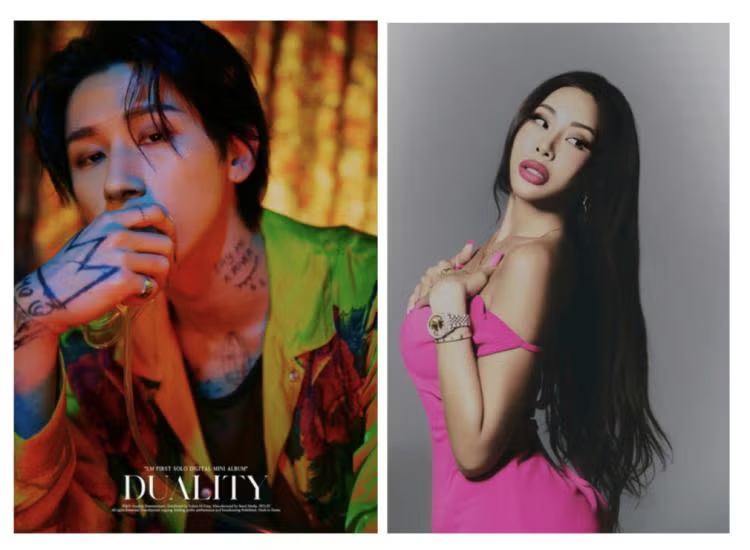
K-pop idols such as Im Changkyun of Monsta X (known by his stage name I.M) and Jessi Ho (known as Jessi) are two examples of Korean American k-pop entertainers whose work I studied for this LING 1000 project, as pictured in the photographs below.
In-text image 1

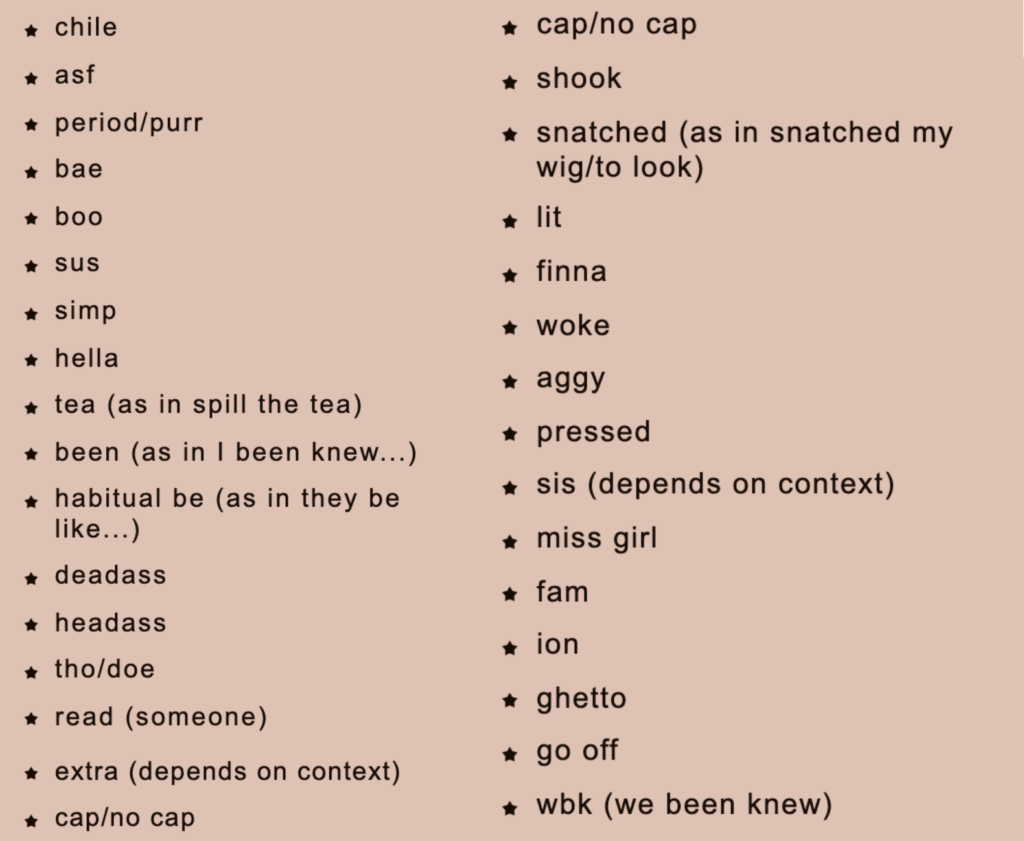
I.M was born in South Korea but moved to Boston, Massachusetts, where he spent most of his early life before moving back to South Korea. As one of the lyricists and producers for the group, he writes most of his own raps, many of which are littered with misused and out of place features of what linguists call AAVE (African American Vernacular English). It can be assumed that I.M includes AAVE phrases like “Fantastic, that’s me ‘cause I slay,” “Yo, I go loco… check my flow,” “... no cap, cap (no cap),” and “I ain’t got no limit” in the songs “ FANTASIA ” and “ Rush Hour ” to attempt to fit into African American hip hop culture. Many Korean rappers find inspiration in this genre, even going so far as to mimic their style as well as their language.

Although I.M is not viewed as an offender in the area of cultural appropriation, Jessi has been accused of blackfishing throughout her entire musical career. Jessi was born in New York City and raised in New Jersey, and in interviews with other Korean-American idols she retains a classic Jersey accent. It can be presumed that this is her natural way of speaking. For instance, in the pronunciation of certain words, such as “sauce,” she fully embraces said Jersey accent and accentuates the medial vowel sound so that the standard pronunciation  /sɑs/ (in IPA transcription)  sounds more like /sɔːs/. This is a common trait of New Jersey accents. However, in a video with the FO Squad, all of whom are African American, she speaks differently, with what some call a “blaccent.” She starts using AAVE terms more frequently, such as “bish” instead of “bitch” and “ya” instead of “you.” This is reminiscent of the vocabulary she uses in her songs, as heard in “ Cold Blooded ” and “ ZOOM .” In these songs she frequently uses slang that originated in African American culture alongside syntactic features identified for AAVE, such as the double negative and zero copula. She also makes strong use of what sociolinguists call /aɪ/ monophthongization, common to both Southern and AAVE accents, so that words like “right” sound more like “raht.”

Interestingly enough, although I.M was born in Boston, he retains little to no signs of a classic Boston accent. According to Wolfram and Schilling, the unmistakable Boston accent was “established by emigrants” originally from Southeastern England (Wolfram and Schilling, 2016, pp. 28). A classic Boston accent includes certain pronunciations and elongation of vowels, as well as the elimination of consonants depending on the exact word. In an interview with Zach Sang from late 2021, Sang questions I.M on his unique accent, which surprisingly has no discernible​ nods to his childhood dialect. I.M lacks the dropping of the postvocalic [r] that originated from the initial rhotic British-English dialects, and instead sounds more ‘Australian,’ as stated by Sang. Interestingly enough, Boston is not particularly known for having a large African-American community, and AAVE features are not included in the classic Boston accent. This brings up the question of where he discovered AAVE: Why does I.M choose to use AAVE in his songs when he did not grow up in an AAVE-speaking community? To clarify, both I.M and Ho codeswitch between standard English and AAVE to an extent, depending on whether they’re on or off stage. However, while I.M’s speaking voice retains no hints of the frequent (mis)use of AAVE that he uses in his performing voice, Ho’s does the opposite. Ho uses terms that originated in AAVE in her every day speech, though it seems to heighten even more when she is around African American individuals, such as in the video with the Fo Squad.

Though I.M and Ho are not the only offenders of misusing AAVE in their music, they are two of the most obvious examples. Other idols that are fluent in English, such as Bang Chan of Stray Kids, Huh Yunjin of LE SSERAFIM, and Yoon Keeho of P1Harmony are also well-known in terms of their use of AAVE and cultural appropriation. Linguistically, it seems that multiple American English-speaking k-pop idols raised in the United States seem to be comfortable with the insensitivity that comes with cultural appropriation, much more than those who were born and raised in the non-English speaking country of Korea. However, this difference could also point towards the popularization of AAVE terms in Generation Z vocabulary, as younger idols of the newest k-pop generation are often seen as quirky and relatable because of their use of AAVE.

​The roots of linguistic cultural appropriation and disrespect in k-pop go all the way back to the beginnings of the music genre. Their hold on newer generations of k-pop idols has only deepened in recent years. Although it is debatable whether or not the linguistic choices of these idols is offensive, it is undeniable that the language practices identified in this blog perpetuate deep ties to stereotypes of African-American English, both within the genre and the k-pop industry itself.


Image credit

https://www.youtube.com/watch?v=AQ0tR4RXMHY

References

  1. Wolfram, W., & Schilling, N. (2016). Why Dialects? In American English: Dialects and

    Variation (3rd ed., pp. 27–34). John Wiley and Sons, Inc.

  2. Zach Sang Show. (2021, December 15). Monsta X Talks The Dreaming Album & Movie, Success, Recording In Different Languages & More! [Video]. YouTube. https://www.youtube.com/watch?v=UTw_nkADesg

  3. Labov, W. (2006). 13. The Social Stratification of (r) in New York City Department Stores. In The Social Stratification of English in New York City (pp. 168–179). essay, Cambridge University Press.

  4. Irwin, P., & Nagy, N. (2007, October). University of Pennsylvania Working Papers in Linguistics . Penn Libraries. Retrieved December 5, 2022, from https://repository.upenn.edu/cgi/viewcontent.cgi?article=1009&context=pwpl

  5. DIVE Studios / 다이브 스튜디오. (2020b, September 9). Catching Up: Jessi ( 제시) (FULL Episode) I KPDB Ep. #73 [Video]. YouTube. https://www.youtube.com/watch?v=uB8Gzw9wSwg

  6. Lippi-Green, R., Barrett, R., Cramer, J., & McGowan, K. B. (2023). English With An Accent: Language, Ideology and Discrimination in the United States . Routledge.


?> Slay, Yeoja-Boss!: The Misuse of AAVE in Modern K-Pop Culture | Department of Linguistics | University of Colorado Boulder

Privacy Policy

Terms of Service

Refund Policy

Aave

Aave

Aave

Aave Aave Aave Aave

Aave

Skip to main content

Slay, Yeoja-Boss!: The Misuse of AAVE in Modern K-Pop Culture

Slay, Yeoja-Boss!: The Misuse of AAVE in Modern K-Pop Culture

Author: Phoebe Ham
Advisor: Prof. Kira Hall, TA Forest Stuart
Class: LING 1000: Language in US Society
Semester: Fall 2022
LURA 2023

In recent years, the popularity of Korean pop sensations such as BTS and BLACKPINK has blown up and expanded well past the continent from which they originated, taking over streaming services, award shows, and more. As more and more k-pop groups appeal to Western audiences and seek out global acknowledgment, foreign fans, especially in the United States, find themselves unable to ignore this versatile genre of music. However, a large number of newer fans and “locals”–people who are not proclaimed fans of said groups–are unaware of the racist past attributed to many Korean artists working within this genre of music.

K-pop idols such as Im Changkyun of Monsta X (known by his stage name I.M) and Jessi Ho (known as Jessi) are two examples of Korean American k-pop entertainers whose work I studied for this LING 1000 project, as pictured in the photographs below.

In-text image 1

I.M was born in South Korea but moved to Boston, Massachusetts, where he spent most of his early life before moving back to South Korea. As one of the lyricists and producers for the group, he writes most of his own raps, many of which are littered with misused and out of place features of what linguists call AAVE (African American Vernacular English). It can be assumed that I.M includes AAVE phrases like “Fantastic, that’s me ‘cause I slay,” “Yo, I go loco… check my flow,” “... no cap, cap (no cap),” and “I ain’t got no limit” in the songs “ FANTASIA ” and “ Rush Hour ” to attempt to fit into African American hip hop culture. Many Korean rappers find inspiration in this genre, even going so far as to mimic their style as well as their language.

Although I.M is not viewed as an offender in the area of cultural appropriation, Jessi has been accused of blackfishing throughout her entire musical career. Jessi was born in New York City and raised in New Jersey, and in interviews with other Korean-American idols she retains a classic Jersey accent. It can be presumed that this is her natural way of speaking. For instance, in the pronunciation of certain words, such as “sauce,” she fully embraces said Jersey accent and accentuates the medial vowel sound so that the standard pronunciation  /sɑs/ (in IPA transcription)  sounds more like /sɔːs/. This is a common trait of New Jersey accents. However, in a video with the FO Squad, all of whom are African American, she speaks differently, with what some call a “blaccent.” She starts using AAVE terms more frequently, such as “bish” instead of “bitch” and “ya” instead of “you.” This is reminiscent of the vocabulary she uses in her songs, as heard in “ Cold Blooded ” and “ ZOOM .” In these songs she frequently uses slang that originated in African American culture alongside syntactic features identified for AAVE, such as the double negative and zero copula. She also makes strong use of what sociolinguists call /aɪ/ monophthongization, common to both Southern and AAVE accents, so that words like “right” sound more like “raht.”

Interestingly enough, although I.M was born in Boston, he retains little to no signs of a classic Boston accent. According to Wolfram and Schilling, the unmistakable Boston accent was “established by emigrants” originally from Southeastern England (Wolfram and Schilling, 2016, pp. 28). A classic Boston accent includes certain pronunciations and elongation of vowels, as well as the elimination of consonants depending on the exact word. In an interview with Zach Sang from late 2021, Sang questions I.M on his unique accent, which surprisingly has no discernible​ nods to his childhood dialect. I.M lacks the dropping of the postvocalic [r] that originated from the initial rhotic British-English dialects, and instead sounds more ‘Australian,’ as stated by Sang. Interestingly enough, Boston is not particularly known for having a large African-American community, and AAVE features are not included in the classic Boston accent. This brings up the question of where he discovered AAVE: Why does I.M choose to use AAVE in his songs when he did not grow up in an AAVE-speaking community? To clarify, both I.M and Ho codeswitch between standard English and AAVE to an extent, depending on whether they’re on or off stage. However, while I.M’s speaking voice retains no hints of the frequent (mis)use of AAVE that he uses in his performing voice, Ho’s does the opposite. Ho uses terms that originated in AAVE in her every day speech, though it seems to heighten even more when she is around African American individuals, such as in the video with the Fo Squad.

Though I.M and Ho are not the only offenders of misusing AAVE in their music, they are two of the most obvious examples. Other idols that are fluent in English, such as Bang Chan of Stray Kids, Huh Yunjin of LE SSERAFIM, and Yoon Keeho of P1Harmony are also well-known in terms of their use of AAVE and cultural appropriation. Linguistically, it seems that multiple American English-speaking k-pop idols raised in the United States seem to be comfortable with the insensitivity that comes with cultural appropriation, much more than those who were born and raised in the non-English speaking country of Korea. However, this difference could also point towards the popularization of AAVE terms in Generation Z vocabulary, as younger idols of the newest k-pop generation are often seen as quirky and relatable because of their use of AAVE.

​The roots of linguistic cultural appropriation and disrespect in k-pop go all the way back to the beginnings of the music genre. Their hold on newer generations of k-pop idols has only deepened in recent years. Although it is debatable whether or not the linguistic choices of these idols is offensive, it is undeniable that the language practices identified in this blog perpetuate deep ties to stereotypes of African-American English, both within the genre and the k-pop industry itself.


Image credit

https://www.youtube.com/watch?v=AQ0tR4RXMHY

References

  1. Wolfram, W., & Schilling, N. (2016). Why Dialects? In American English: Dialects and

    Variation (3rd ed., pp. 27–34). John Wiley and Sons, Inc.

  2. Zach Sang Show. (2021, December 15). Monsta X Talks The Dreaming Album & Movie, Success, Recording In Different Languages & More! [Video]. YouTube. https://www.youtube.com/watch?v=UTw_nkADesg

  3. Labov, W. (2006). 13. The Social Stratification of (r) in New York City Department Stores. In The Social Stratification of English in New York City (pp. 168–179). essay, Cambridge University Press.

  4. Irwin, P., & Nagy, N. (2007, October). University of Pennsylvania Working Papers in Linguistics . Penn Libraries. Retrieved December 5, 2022, from https://repository.upenn.edu/cgi/viewcontent.cgi?article=1009&context=pwpl

  5. DIVE Studios / 다이브 스튜디오. (2020b, September 9). Catching Up: Jessi ( 제시) (FULL Episode) I KPDB Ep. #73 [Video]. YouTube. https://www.youtube.com/watch?v=uB8Gzw9wSwg

  6. Lippi-Green, R., Barrett, R., Cramer, J., & McGowan, K. B. (2023). English With An Accent: Language, Ideology and Discrimination in the United States . Routledge.


?> Terms of Service

Terms and Conditions

These Terms of Service ("Agreement") govern your access to this online service (the "Site"). By browsing or using the Site, you agree that you have read, understood, and agree to be bound by these Terms. If you do not accept all of the terms in this document, you must not use the Site.

What this site does

This website may provide digital tools and resources that are made available subject to these Terms and Conditions. By using this site, you acknowledge that your use is governed by these Terms.

Eligibility

You may use the Site only if you are at least 18 years old or the age of legal majority in your area and have the legal capacity to enter into a binding agreement. By using the Site, you confirm that you meet these requirements.

Account Registration

Certain features of the Site may require you to register an account. You promise to provide true, up-to-date, and complete information when creating an account and to keep that information current as needed. You are responsible for maintaining the confidentiality of your login credentials and for all activities that occur under your account.

You agree to notify us promptly of any suspicious use of your account or any other breach of security. We may, at our discretion to disable or close your account if we believe that you have violated these Terms or engaged in any fraudulent activity.

Your Responsibilities

You agree that you will not use the Site to:

Ownership of Content

The Site and its content, including but not limited to text, graphics, logos, icons, images, and software, are owned by us or our licensors and are protected by intellectual property laws. We grant you a limited, non-exclusive, non-transferable license to use the Site for your personal, non-commercial use, subject to these Terms.

You must not reproduce, adapt, distribute, resell, or create derivative works based on any portion of the Site or its content without our prior written consent, except as explicitly allowed by applicable law.

User Content

If you upload or otherwise make available any content (such as comments, images, or other materials) on or through the Site ("User Content"), you retain ownership of your User Content. However, by providing User Content, you grant us a worldwide, royalty-free, sub-licensable license to use, adapt, display, and distribute your User Content in connection with the operation and promotion of the Site.

You represent that you have all necessary rights to submit the User Content and that your User Content does not violate any third-party interests or any applicable law. We reserve the right to monitor, review, or remove User Content at our discretion.

Third-Party Links

The Site may contain links to third-party websites or services that are not owned or controlled by us. We have no control over and assume no responsibility for the content, privacy policies, or actions of any third-party websites. Using such links is at your own risk, and we encourage you to read the terms and privacy policies of any third-party sites you visit.

Disclaimers

The Site and all content and services provided through the Site are offered on an "as available" basis, without any guarantees of any kind, whether express or implied. To the fullest extent permitted by law, we disclaim all warranties, including implied warranties of satisfactory quality, fitness for a particular purpose, and non-infringement.

We do not guarantee that the Site will be uninterrupted, secure, or free from errors or viruses, or that any defects will be corrected.

Our Responsibility is Limited

To the extent permitted by applicable law, in no event shall we or our owners, staff, representatives, or affiliates be liable for any special, incidental, exemplary, or loss of revenue arising out of or in connection with your use of, or inability to use, the Site, even if we have been advised of the possibility of such damages.

In any event, our total liability to you for any claims arising out of or relating to these Terms or the use of the Site shall be limited to the amount you have paid (if any) to use the Site or access its services during the 6-month period immediately preceding the event giving rise to the claim.

You Agree to Indemnify Us

You agree to defend and indemnify and hold harmless us and our officers, employees, agents, and partners from and against any and all claims, losses, liabilities, and expenses (including reasonable attorneys' fees) arising out of or related to your use of the Site, your User Content, or your violation of these Terms or any applicable law.

Modifications

We may modify these Terms from time to time. When we do, we will post the updated Terms on this page and revise the "Last updated" date below. Your continued use of the Site after any changes have been made constitutes your acceptance of the revised Terms.

Governing Law and Jurisdiction

These Terms and your use of the Site shall be governed by and construed in accordance with the laws of the jurisdiction in which we are established, without regard to its conflict of law rules. You agree that any claim arising out of or relating to these Terms or the Site will be brought exclusively in the competent courts of that jurisdiction, and you consent to the personal jurisdiction of those courts.

Contact Us

If you have any concerns about these Terms, please contact us using the contact details provided on this site. You can also visit our home page or support link that may be available.